
2026 CLINICIAN CONNECTION
CLINICAL CURVEBALL SUMMIT
INSPIRE - EQUIP - CONNECT
September 18, 2026 | 10:00am - 5:00pm ET
Online | 6 Ethics CE Credits
Three deep-dive workshops designed to help clinicians navigate some of the most common and most stressful curveballs in mental health practice.
Sometimes the Hardest Parts of Clinical Work
Are the Things Nobody Really Taught Us
Most clinicians leave graduate school with strong foundations in theory, ethics, and clinical skills. But many of the situations that create the most stress in real practice happen outside the textbook.
Court involvement. Disability documentation. Conversations about psychiatric medication. Ethical gray areas that can leave even experienced clinicians feeling uncertain, anxious, or alone.
The Clinical Curveball Summit was created to help you navigate the parts of the work that catch us off guard.
Through three practical and engaging workshops, we'll dig into real clinical challenges, the ethical questions they raise, and strategies to help you feel more prepared in the moments that matter most.
Because sometimes the biggest curveballs are the things nobody really taught us about.
When the Court Comes Calling: A Legal and Ethical Roadmap for Clinicians
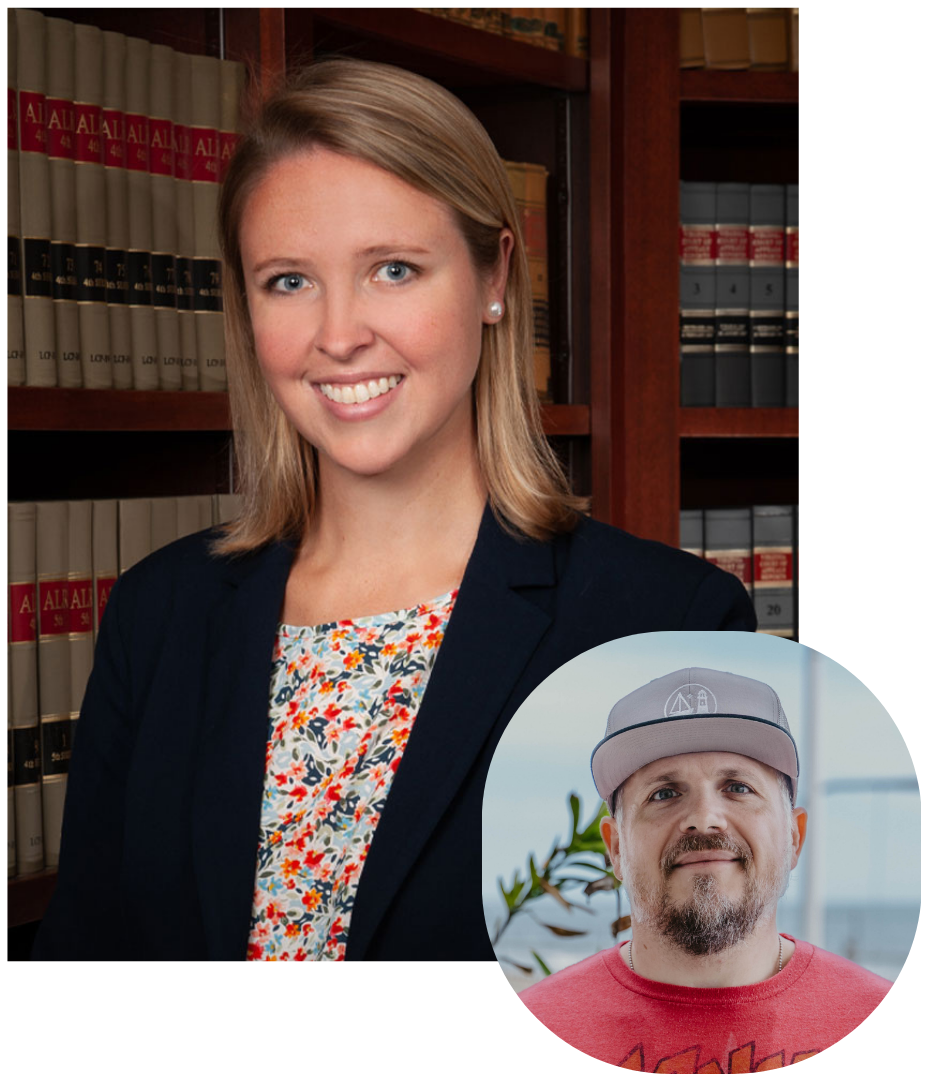
Quinn B. Novak, J.D.
With Chris Conley, LPC, Doctoral Candidate
A subpoena lands on your desk. A custody case names you. A client files a board complaint. Few moments rattle a clinician faster, and few are covered anywhere in graduate training. This workshop pairs a practicing attorney with a clinician to walk you through both sides of the table.
Quinn Novak, a partner whose practice includes representing healthcare professionals before the Virginia Department of Health Professions, covers the legal terrain: subpoenas for records, witness subpoenas, custody case considerations, what to expect when you are called to testify, and how board complaints actually unfold. Chris Conley then turns to the codes you are bound by, examining how the ACA, AAMFT, and NASW ethics standards speak directly to these legal pressures and where your professional obligations and the law intersect.
You will leave knowing how to respond when the legal system enters your practice.
Medication in the Room: A Clinician's Update on Psychiatric Medications and the Shame That Keeps Patients From Taking Them
Patria Alexander, PMHNP-BC
The medication is always a variable in the room, whether it's named or not. This two-hour training gives clinicians a practical, high-level update on the psychiatric medications you encounter most: antidepressants, mood stabilizers, anxiolytics, and stimulants. You'll learn how they work, the side effects that surface, and what you need to collaborate confidently with prescribers. The second half turns to the part pharmacology lectures skip: shame. Why do patients resist, delay, or secretly stop their medication, and how can you meet that as a clinical barrier rather than non-compliance?
Patria is a Board-Certified Psychiatric Mental Health Nurse Practitioner, founder of DepthWorks Psychiatry, and creator of Narrative Integrative Psychiatry. Born in the Caribbean and shaped by psychiatric nursing, clinical leadership, and military service, she brings cross-cultural depth to a workshop that grows directly from her own Virginia practice.

The School Puzzle: What Therapists Need to Know About IEPs, 504 Plans, Testing, and Family Advocacy
Amy Parks, PhD, LPC, ACS
Working with children, adolescents, and families often means navigating far more than therapy. Clinicians are regularly asked to interpret educational testing, explain school recommendations, sit in on meetings, advocate for services, and help families manage the emotional weight of learning differences and academic struggle. Yet most mental health professionals receive little formal training in how educational systems actually work.
This practical workshop gives clinicians a roadmap to the intersection of mental health, education, and family functioning. You'll learn the fundamentals of IEPs, 504 Plans, educational evaluations, and common assessment tools, along with strategies for collaborating with schools and guiding families through complex educational decisions. The session also digs into what happens clinically when learning disabilities, ADHD, anxiety, behavioral concerns, and family stress all converge in the school setting.
Designed for clinicians at every stage, it offers case examples and strategies you can use right away.

Here’s What Makes This Summit Different
This isn't another generic ethics training filled with vague hypotheticals and information you'll never use. The Clinical Curveball Summit is built around the situations clinicians feel least prepared for, the moments that land without warning and don't come with a clear playbook.
And it's led by people who have actually been in the room. Not academics reciting the ethics code, but a practicing attorney, a prescriber, and seasoned clinicians who've lived these situations and know what they demand in real time.
Created by clinicians, for clinicians, this summit is practical, engaging, and immediately relevant to the work you're already doing every day.
Three workshops. Six Ethics CEs. Real clinical challenges. Guidance you can actually take back into the room with you.
Continuing Education Details
Clinician Connection has partnered with Turning Point Counseling and Consulting to provide NBCC and ACE ASWB continuing education credit.
Turning Point Counseling and Consulting, provider number #418 is approved to offer social work continuing education by the Association on Social Work Boards (ASWB) Approved Continuing Education (ACE) program. Organizations, not individual courses, are approved as ACE providers. Stated and provincial regulator boards have the final authority to determine whether an individual course may be accepted for continuing education credit. Turning Point Counseling and Consulting maintains responsibility for this course. ACE provider approver period 10/01/2025-10/01/2028.
Turning Point Counseling and Consulting has been approved by NBCC as an Approved Continuing Education Provider, ACEP No. 7312. Programs that do not qualify for NBCC credit are clearly identified. Turning Point Counseling and Consulting is solely responsible for all aspects of the programs.
Each session is worth 2 Ethics CE credits, for a total of 6 across the summit. To receive credit for a session, attendees must be present for the full session with their camera on and complete the session evaluation afterward. Credit is awarded per session, so partial attendance earns partial credit.
Turning Point Counseling and Consulting can be contacted at hello@turningpointva.com.
© Copyrights Clinician Connection 2026. All Rights Reserved.
Contact us at hello@clinicianconnection.net.